Notes:
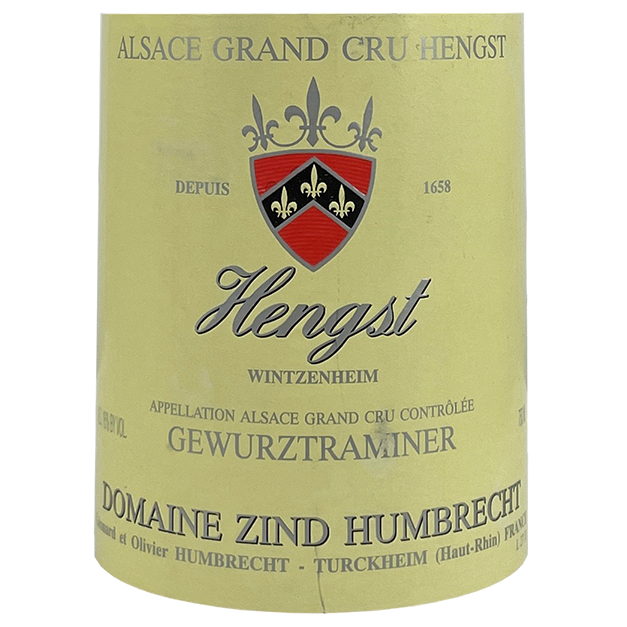
Producer: Domaine Zind-Humbrecht is one of Alsace's most celebrated wine estates, with family winemaking roots extending back to 1658. The modern domaine was established in 1959, when the Zind and Humbrecht families combined their vineyard holdings, bringing together generations of experience across some of the region's most distinctive terroirs. Under the direction of Olivier Humbrecht MW, the estate became internationally recognized for its meticulous vineyard management, biodynamic farming, and uncompromising approach to expressing individual vineyard character. The domaine is particularly associated with powerful, concentrated wines that retain a clear connection to their origins, whether produced from Riesling, Pinot Gris, Gewurztraminer, or other traditional Alsatian varieties. Its Grand Cru holdings include some of the region's most respected vineyards, with Hengst occupying an important place in the estate's range. The 1998 Gewurztraminer Hengst reflects the domaine's emphasis on mature fruit, long fermentations, and wines of substantial structure and aging potential.
Vineyard: Hengst Grand Cru is located in Wintzenheim, near Colmar in southern Alsace, on a hillside with predominantly south and southeast exposures. Its soils consist of calcareous marl dating to the Oligocene period, providing a distinctive geological foundation for the vineyard's powerful and intensely flavored wines. The site combines moderate to steep slopes with an exposure favorable to grape ripening, allowing Gewurztraminer to develop considerable concentration and aromatic intensity. Hengst has a long viticultural history, with records of the vineyard extending back to the ninth century, and its name is closely associated with some of Alsace's most structured expressions of Gewurztraminer. In 1998, the vineyard produced fruit of exceptional ripeness, reaching approximately 125° Oechsle at harvest. The resulting wine combined significant natural concentration with the spicy, earthy, and deeply textured qualities associated with Hengst. Yields were approximately 41 hectoliters per hectare.
Winemaking: The 1998 Hengst Gewurztraminer underwent a prolonged fermentation, allowing the wine to develop considerable glycerol, texture, and structural depth. Olivier Humbrecht's original vintage notes emphasize the vineyard's particularly strong influence on the finished wine, with its characteristic spice and undergrowth aromas taking precedence over more conventional floral expressions of Gewurztraminer. The wine reached 15.9% alcohol, reflecting the exceptional ripeness achieved in the vineyard, while retaining 33 grams per liter of residual sugar. Despite its considerable concentration and alcohol, the wine was described as showing relatively little alcoholic warmth, with its substantial body and glycerol-rich texture providing balance. The resulting style is powerful, deeply flavored, and distinctly medium-sweet rather than dry. The combination of mature fruit, savory spice, and pronounced structure makes this a particularly individual expression of Alsace Grand Cru Gewurztraminer. The wine was bottled in September 1999.
Technical Details: 1998 vintage; 100% Gewurztraminer; 15.9% ABV; 33 g/L residual sugar; 3.4 g/L total acidity expressed as tartaric acid; pH 4.2; 125° Oechsle must weight at harvest; sweetness index 3 on the domaine's five-point scale; medium-sweet classification; bottled September 1999. The domaine's original vintage notes recommended a drinking window beginning in 2003 and extending beyond 2015. Given the wine's age, current condition will depend on storage history and individual bottle preservation.
Food Pairing: Foie gras terrine, duck liver pâté, roast duck with five-spice seasoning, pork belly with ginger, Moroccan chicken tagine with apricots, aromatic Indian curries, and aged Munster cheese are particularly suitable partners for this richly textured Gewurztraminer. The wine's 33 g/L residual sugar, pronounced spice character, and substantial body allow it to complement dishes with sweetness, aromatic seasoning, and considerable richness. Its savory, earthy qualities also make it well suited to mushroom preparations and mature washed-rind cheeses. For a classic Alsatian pairing, serve with Munster cheese and caraway seeds. Its concentration and mature vintage character also make it an appealing wine to enjoy slowly on its own.
Zind-Humbrecht Alsace Grand Cru “Hengst” Gewurztraminer 1998
Reviews:
Wine Advocate: 94
Choose options
More Products Like This