Notes:
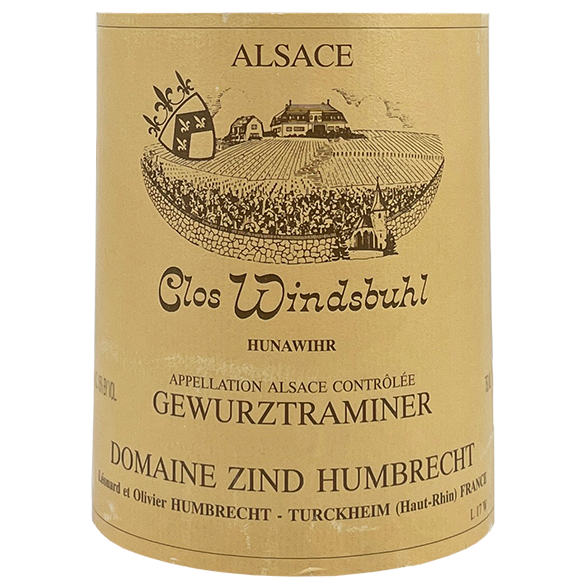
Producer: Domaine Zind-Humbrecht is one of Alsace's most distinguished estates, with the Humbrecht family's winemaking history extending back to the seventeenth century. The modern domaine was established in 1959 through the union of the Zind and Humbrecht families, combining important vineyard holdings across Alsace. Under Léonard Humbrecht and later his son, Olivier Humbrecht MW, the estate developed an international reputation for its meticulous vineyard management, naturally concentrated wines, and commitment to expressing individual terroirs. Olivier became the first French Master of Wine and has been instrumental in advancing the domaine's biodynamic approach to viticulture. The estate is particularly celebrated for its Riesling, Pinot Gris, and Gewurztraminer, with Clos Windsbuhl occupying an important position among its individual vineyard bottlings. The 1998 Gewurztraminer Clos Windsbuhl reflects the domaine's emphasis on fully mature fruit, natural fermentation, and wines capable of developing complexity over extended periods in bottle.
Vineyard: Clos Windsbuhl is a historic hillside vineyard overlooking Hunawihr, near Riquewihr in Alsace's Haut-Rhin department. Its south to southeast exposure and relatively elevated position create a cooler, later-ripening environment than many vineyards farther south around Turckheim. The vineyard is planted on Muschelkalk limestone, a geological formation that contributes to its distinctive mineral structure and ability to retain acidity even when the grapes reach considerable ripeness. The combination of altitude, limestone, and a long growing season gives Clos Windsbuhl Gewurztraminer a characteristic balance of aromatic intensity, concentration, and freshness. In 1998, the grapes reached 122° Oechsle, with very little botrytis and exceptionally healthy fruit. These conditions allowed the vineyard to produce a wine of considerable aromatic complexity and natural richness. Yields were approximately 48 hectoliters per hectare, and the resulting wine was among the more concentrated expressions of Clos Windsbuhl from the late 1990s.
Winemaking: The 1998 Gewurztraminer Clos Windsbuhl was produced from exceptionally ripe, healthy grapes with minimal influence from noble rot. Fermentation developed a substantial body and rich texture while retaining enough residual sugar to create a distinctly medium-sweet style. The finished wine reached 15.1% alcohol with 39 grams per liter of residual sugar, combining considerable concentration with the mineral structure and acidity associated with Clos Windsbuhl. Olivier Humbrecht's original vintage notes describe a richly textured, harmonious wine with persistent flavors that move between spice and ripe fruit. Despite the elevated alcohol, the wine maintains a balanced impression on the palate, with its natural richness supported by the vineyard's freshness. It was bottled in September 1999. Unlike the almost completely dry 1997 Clos Windsbuhl, the 1998 presents a fuller, sweeter expression of the same vineyard, demonstrating the considerable stylistic differences that can emerge between successive vintages.
Technical Details: 1998 vintage; 100% Gewurztraminer; 15.1% ABV; 39 g/L residual sugar; 4.2 g/L total acidity expressed as tartaric acid; pH 3.9; 122° Oechsle must weight at harvest; 48 hl/ha vineyard yield; sweetness index 4 on the domaine's five-point scale; medium-sweet classification; bottled September 1999. The domaine originally suggested a drinking window beginning in 2005 and extending beyond 2015.
Food Pairing: Foie gras terrine, duck pâté, roast duck with orange glaze, pork belly with ginger, chicken tagine with dried apricots, aromatic Thai curries, Indian dishes featuring cardamom and saffron, and aged Munster cheese are excellent partners for this richly textured Gewurztraminer. The wine's 39 g/L residual sugar, pronounced spice character, and substantial body allow it to complement dishes that combine richness, aromatic seasoning, and moderate sweetness. Its natural acidity helps provide balance alongside fatty preparations, while the wine's floral and fruit-driven qualities work particularly well with ginger, coriander, and other fragrant spices. For a traditional Alsatian pairing, serve with Munster cheese and caraway seeds, allowing the wine's sweetness and aromatic intensity to contrast with the cheese's pungency. Given its maturity, the wine may also be enjoyed on its own, allowing its developed aromas and complex texture to unfold gradually.
Zind-Humbrecht Alsace Gewurztraminer “Clos Windsbuhl” 1998
Reviews:
Wine Advocate: 92
Choose options
More Products Like This