Notes:
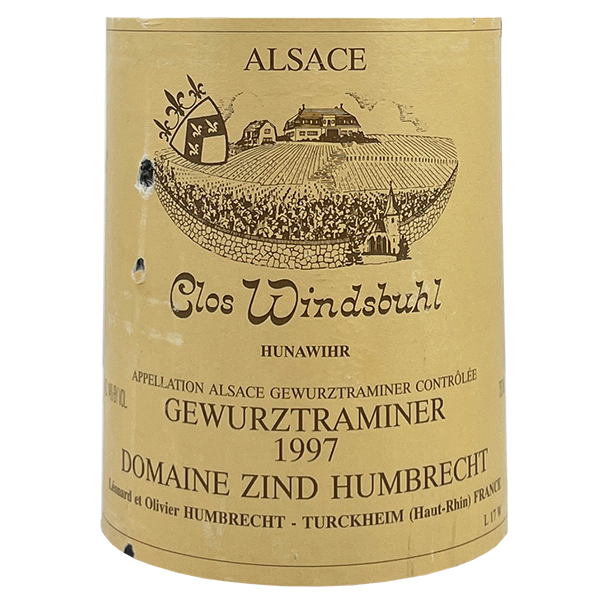
Producer: Domaine Zind-Humbrecht is one of Alsace's most respected estates, with the Humbrecht family's viticultural history dating back to the seventeenth century. The modern domaine was founded in 1959 through the union of the Zind and Humbrecht families, combining vineyard holdings across some of Alsace's most distinctive sites. Léonard Humbrecht helped establish the estate's international reputation through his commitment to demanding hillside vineyards, low yields, and wines that reflect their individual terroirs. His son, Olivier Humbrecht MW, became the first French Master of Wine and continued the domaine's emphasis on meticulous vineyard work and traditional fermentation. The estate is particularly recognized for its site-specific Riesling, Pinot Gris, and Gewurztraminer, ranging from powerful Grand Cru bottlings to individual vineyard wines such as Clos Windsbuhl. The 1997 Gewurztraminer Clos Windsbuhl demonstrates the domaine's ability to produce a concentrated, ageworthy wine while preserving freshness and a distinctly dry finish.
Vineyard: Clos Windsbuhl is a historic vineyard overlooking the village of Hunawihr, near Riquewihr in Alsace's Haut-Rhin department. Its hillside position, relatively high elevation, and south to southeast exposure create a cooler, later-ripening environment than many of the vineyards surrounding Turckheim and Wintzenheim. The soils are dominated by Muschelkalk limestone, a geological formation that contributes to the vineyard's characteristic mineral structure and helps the grapes retain acidity through a long growing season. The combination of elevation, limestone, and a relatively cool microclimate allows Gewurztraminer to achieve considerable ripeness without sacrificing the freshness needed for balance and longevity. In 1997, the fruit remained exceptionally healthy, with little influence from noble rot. Harvest ripeness reached 114° Oechsle, while yields were limited to approximately 35 hectoliters per hectare. These conditions produced a concentrated wine with the aromatic intensity of Gewurztraminer and the more restrained, mineral-driven personality associated with Clos Windsbuhl.
Winemaking: The 1997 Clos Windsbuhl Gewurztraminer underwent an unusually vigorous natural fermentation, during which indigenous yeasts converted nearly all the grape sugars into alcohol. Although the fruit was harvested at a ripeness level capable of producing a substantially sweeter wine, fermentation continued until only 4 grams per liter of residual sugar remained. The finished wine reached 16.1% alcohol, making it an exceptionally powerful but essentially dry expression of Gewurztraminer. Olivier Humbrecht described the wine as more austere than usual, with pronounced spice, delicate rose aromas, and the balancing acidity characteristic of Clos Windsbuhl. Rather than emphasizing the lush sweetness often associated with the grape, the 1997 offers a firmer, more structured interpretation, with its concentration supported by mineral character and freshness. It was bottled in September 1998, and the domaine originally recommended extended cellaring to allow its structure and aromatic complexity to develop.
Technical Details: 1997 vintage; 100% Gewurztraminer; 16.1% ABV; 4 g/L residual sugar; 114° Oechsle harvest must weight; 35 hl/ha vineyard yield; bottled September 1998; dry white wine. The domaine's original suggested drinking window was 2005–2015, although the present condition of individual bottles will depend on storage and preservation.
Food Pairing: Roast duck with five-spice seasoning, pork tenderloin with fennel, Alsatian choucroute garnie, roast chicken with herbs, veal with mushrooms, seared foie gras, aromatic Thai dishes, and aged Munster cheese are suitable partners for this unusually dry Gewurztraminer. The wine's powerful structure, pronounced spice character, and minimal residual sugar make it especially appropriate for savory preparations rather than desserts or dishes requiring a sweet wine. Its concentrated palate can stand up to rich meats and assertive seasoning, while the acidity associated with Clos Windsbuhl helps balance fatty dishes. For a traditional Alsatian pairing, serve with choucroute garnie, where the wine's body and aromatic intensity complement smoked pork, sausages, and sauerkraut. Given its age, serving alongside relatively simple preparations may also allow its developed aromas to take center stage.
Zind-Humbrecht Alsace Gewurztraminer “Clos Windsbuhl” 1997
Reviews:
Wine Advocate: 95
Choose options
More Products Like This