

Notes:
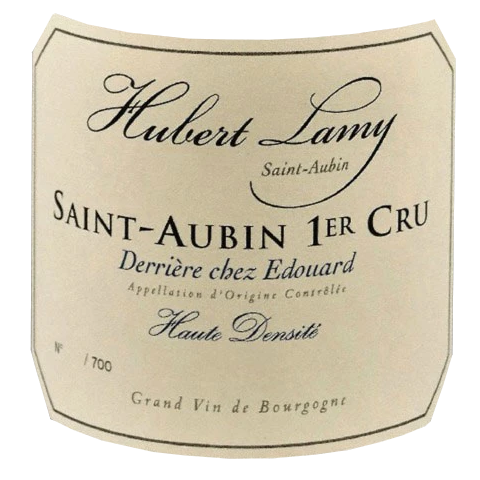
Producer: Domaine Hubert Lamy traces its roots in Saint-Aubin to 1640, though the modern estate was established by Hubert Lamy in 1973. Since Olivier Lamy joined the domaine in 1995, it has become one of Burgundy's most influential white wine producers, with an uncompromising focus on viticulture and terroir expression. Today the estate farms approximately 18.5 hectares across more than 20 appellations, with Chardonnay accounting for roughly 80% of production. Vineyard work emphasizes extremely high-density plantings, severe yield control, deep root development, and meticulous canopy management to maximize vineyard expression rather than fruit weight. Lamy's wines have become benchmarks for tension, precision, and longevity, often rivaling far more expensive wines from neighboring Puligny-Montrachet and Chassagne-Montrachet.
Vineyard: En Remilly is widely considered one of Saint-Aubin's greatest Premier Crus, occupying the steep limestone slopes directly above Chevalier-Montrachet and adjacent to Puligny-Montrachet Les Caillerets. Its high elevation and exposed position would ordinarily produce a cool mesoclimate, but the vineyard's south-to-southeast exposure and protection from prevailing winds create a warmer pocket capable of achieving exceptional ripeness while preserving remarkable freshness. The vines are rooted in thin clay-limestone soils over fractured hard limestone bedrock, forcing deep rooting and naturally limiting vigor. Olivier Lamy's parcels, planted primarily in 1989 and 1990, consistently produce wines defined by pronounced mineral tension, saline precision, and extraordinary aging potential, qualities that have made En Remilly one of the most sought-after sites in Saint-Aubin.
Winemaking: Produced from 100% Chardonnay, the grapes are harvested entirely by hand and pressed as whole clusters before undergoing spontaneous fermentation with indigenous yeasts. Lamy has largely abandoned traditional Burgundian pièces in favor of large, neutral demi-muids (600-liter barrels), believing they preserve freshness and texture while minimizing the influence of oak. The wine is matured for 12 to 18 months on its lees, with very little bâtonnage, allowing texture to develop naturally through extended élevage rather than lees stirring. New oak is avoided, and every aspect of the cellar is designed to preserve the vineyard's natural energy, resulting in wines of remarkable transparency and precision.
Food Pairing: Pair with Dover sole, turbot, lobster, roasted monkfish, scallops, or poached halibut finished with beurre blanc. The wine's vibrant acidity and pronounced mineral backbone also complement roast chicken with morels, veal in cream sauce, aged Comté, or mushroom-based dishes where its chalky precision balances richer flavors. While approachable with decanting, En Remilly is built for extended cellaring, and the magnum format offers even slower, more graceful development over the coming two decades.
Choose options
More Products Like This