Notes:
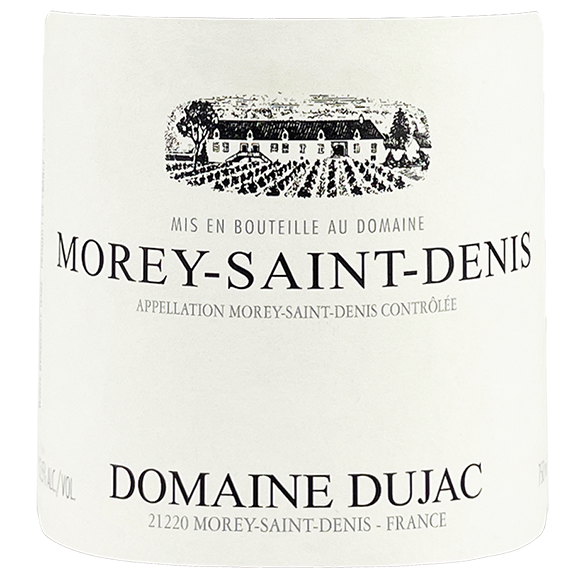
Domaine Dujac Morey-Saint-Denis 2023 is a village-level red Burgundy that offers a compelling introduction to one of the Côte de Nuits’ most celebrated domaines. Made entirely from Pinot Noir, it comes from six parcels surrounding the village of Morey-Saint-Denis and combines the appellation’s natural depth with the aromatic lift, fine structure, and whole-cluster character that have become signatures of Domaine Dujac.
The 2023 Burgundy vintage was generous in volume yet produced wines with notable freshness, energy, and early charm. In Morey-Saint-Denis, careful crop management was particularly important, allowing quality-minded growers to preserve concentration despite abundant yields.
Dujac’s 2023 Morey-Saint-Denis captures that balance particularly well: expressive and inviting in youth, but built with enough structure and complexity to reward further bottle age. Expect a refined expression of Pinot Noir centered on red and dark berries, florals, spice, earthy nuances, and the savory complexity associated with whole-bunch fermentation.
For collectors and Burgundy enthusiasts, this is an excellent opportunity to experience the Domaine Dujac style at the village level, offering both the pedigree of one of Morey-Saint-Denis’ benchmark producers and the accessibility of the 2023 vintage.
Vineyard
The Domaine Dujac Morey-Saint-Denis Rouge is assembled from six vineyard parcels covering 2.92 hectares in the lower part of the Morey-Saint-Denis slope.
The vines lie mainly to the east of the village and west of the RD 974, at elevations between approximately 249 and 264 meters. With slopes averaging only around 3%, the terrain here is gentler than that of the higher hillside vineyards. Exposures vary considerably, from northeast through to due south, giving the domaine a range of microclimates from which to build the final cuvée.
The soils are relatively rich in silt, with fewer stones than vineyards higher on the Côte, although certain areas contain significant quantities of Comblanchien limestone pebbles.
Beneath the surface, two principal geological formations contribute to the character of the wine. Some parcels sit over fine sediment deposited during the gradual filling of the region’s geological collapse basin over millions of years. Others are planted over alluvial fan deposits originating from the Combe de Morey-Saint-Denis, where material was carried down from the higher slopes.
This combination of deeper soils, limestone influence, varied exposures, and multiple parcels gives Dujac the raw material for a village Morey-Saint-Denis that balances fruit, freshness, structure, and complexity rather than expressing a single narrowly defined site.
The domaine has worked progressively toward organic viticulture since the early 2000s, beginning with experimental parcels before converting the entire estate. Domaine Dujac received organic certification in 2011.
Winemaking
Domaine Dujac is one of Burgundy’s producers most closely associated with whole-cluster fermentation, a technique that has played a defining role in the estate’s style for decades.
Rather than routinely destemming all of the Pinot Noir, Dujac incorporates a significant proportion of intact bunches during fermentation. When carefully managed, the stems can contribute aromatic complexity, freshness, spice, structure, and a distinctive floral quality to the finished wine.
In youth, this approach can give the wines an additional savory or herbal dimension and a firmer tannic framework. With bottle age, those elements become increasingly integrated, contributing to the layered tertiary aromas and silky complexity for which mature Dujac wines are renowned.
The objective is not extraction for its own sake. Dujac’s style emphasizes perfume, transparency, texture, and the expression of individual Burgundian terroirs, combining traditional methods with increasingly precise cellar work.
A new winery, first used for the 2022 harvest, has allowed the Seysses family even greater control during vinification. The resulting wines retain the classic Dujac identity while showing greater precision and less pronounced reduction in their youth.
For the Morey-Saint-Denis village wine, this approach produces Pinot Noir with an attractive tension between supple fruit and structural complexity — accessible enough to enjoy relatively young, yet capable of developing considerable nuance with time.
2023 Vintage
The 2023 vintage in Morey-Saint-Denis was defined by abundance. After several seasons marked by lower yields and drought pressure, sufficient rainfall helped Burgundy produce a considerably larger crop.
The size of the harvest meant that vineyard management became critical. Careful de-budding, crop control, and selective viticulture were necessary to prevent excessive yields from diluting concentration.
Despite the generous crop, the best 2023 red Burgundies show freshness, energy, and beautifully expressive fruit. Acidity was generally a little softer than in 2022, giving many wines a more immediately approachable profile while still maintaining enough freshness and mineral definition for aging.
In Morey-Saint-Denis, the vintage produced Pinot Noir with an appealing combination of ripe fruit, aromatic clarity, supple texture, and freshness. Rather than the severity sometimes associated with structured young Burgundy, many 2023s offer considerable charm from an earlier stage.
For Domaine Dujac, whose naturally structured whole-cluster style often benefits from significant bottle age, the openness of 2023 makes this an especially attractive vintage. The wine should offer pleasure relatively early while gaining additional savory, floral, earthy, and spicy complexity as it matures.
Domaine Dujac is one of the benchmark estates of Morey-Saint-Denis and one of the most respected producers in Burgundy’s Côte de Nuits.
The domaine was founded in 1968 by Jacques Seysses, who left his family’s business to pursue winemaking. After gaining practical experience at Domaine de la Pousse d’Or in Volnay, Seysses purchased approximately five hectares of vineyards from Domaine Marcel Graillet in Morey-Saint-Denis and renamed the property Domaine Dujac.
The first wines were initially sold through négociants, but domaine bottling began as early as 1969. Over subsequent decades, Dujac steadily expanded its holdings, growing from roughly five hectares at its foundation to eleven hectares by 1977 and approximately fifteen and a half hectares by 2005.
That expansion brought exceptional vineyards into the domaine’s portfolio, including parcels in Vosne-Romanée Les Malconsorts, Romanée-Saint-Vivant, and Chambertin. In 2014, Dujac also extended its activities into the Côte de Beaune, farming vineyards in Puligny-Montrachet.
Today the estate is led by the next generation of the Seysses family. Jeremy Seysses, his wife Diana, and his brother Alec Seysses joined Jacques in managing the domaine from the late 1990s onward, preserving its distinctive identity while progressively refining both vineyard and cellar practices.
Organic farming, meticulous viticulture, whole-cluster fermentation, and an unwavering focus on terroir remain central to Dujac’s philosophy.
Although the domaine’s Grand Cru and Premier Cru bottlings rank among Burgundy’s most sought-after wines, the Domaine Dujac Morey-Saint-Denis offers a particularly compelling window into the house style: perfumed Pinot Noir, nuanced whole-bunch character, fine structure, and the unmistakable personality of one of Morey-Saint-Denis’ great estates.
There are plenty of earth and floral elements to the plum, red berries and discreet spice aromas. There is both good vibrancy and freshness to the plump, delicious and round middle weight flavors that firm up on the nicely complex and persistent finale. This is a good Morey villages that is worth checking out.
Domaine Dujac Morey-Saint-Denis 2023
Pre-Arrival:Estimated arrival time varies by product. For a more accurate time frame, please contact us.
Choose options
More Products Like This