Notes:
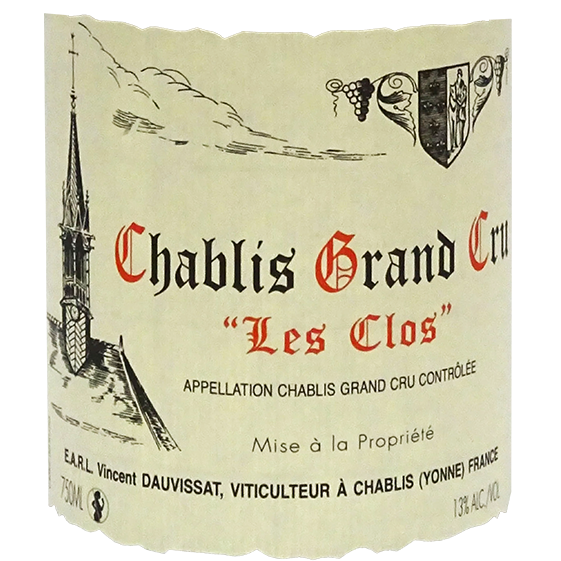
Vincent Dauvissat Chablis Grand Cru Les Clos 2004 is a rare mature expression of one of the greatest vineyards in Chablis from one of the appellation’s benchmark producers. Made entirely from Chardonnay, Les Clos sits at the summit of the Dauvissat range, combining the power and concentration associated with this celebrated Grand Cru with the domaine’s signature precision, mineral tension, and capacity for long aging.
The 2004 vintage brought generous yields but also excellent natural acidity and balanced maturity, qualities particularly well suited to classic Chablis. After more than two decades of bottle age, a well-stored example may show the evolved complexity for which mature Dauvissat is prized: citrus and mineral tones moving toward layers of toast, dried fruit, honey, fresh bread, and savory complexity, while retaining the limestone-driven backbone that defines Les Clos.
For collectors of mature white Burgundy, Grand Cru Chablis, and Vincent Dauvissat, the 2004 Les Clos represents an increasingly difficult-to-find bottle from one of Burgundy's most distinctive domaines.
Vineyard
Les Clos is the largest of Chablis' seven Grand Cru climats and one of its most historically prestigious vineyards. Extending across approximately 25 hectares above the village of Chablis, it occupies a privileged, sun-exposed slope renowned for producing Chardonnay of exceptional depth, structure, and longevity.
Domaine Vincent Dauvissat farms approximately one hectare of Les Clos, acquired after 1950. The parcel has a predominantly south-westerly exposure, with vines averaging more than 40 years of age and some exceeding 50 years.
The vineyard is rooted in the classic Kimmeridgian limestone and marl soils of Chablis, formed during the Upper Jurassic period and rich in fossilized marine material. These limestone-based soils provide both drainage and water retention and are closely associated with the firm structure, saline character, and distinctive mineral expression found in the finest Chablis.
Dauvissat has followed biodynamic farming principles since 2002, without seeking certification. The domaine also uses massale selection, propagating vines from selected vineyard material rather than relying solely on uniform commercial clones. Harvesting is carried out by hand, reflecting Vincent Dauvissat's belief that careful vineyard work is fundamental to producing wines capable of evolving slowly and gracefully in bottle.
Les Clos is generally regarded as the most powerful and complete Grand Cru in the domaine's portfolio: a Chablis built not simply around fruit, but around structure, acidity, minerality, and time.
Winemaking
Vincent Dauvissat approaches winemaking as an interpretation of terroir rather than an exercise in cellar technique. The methods used for Les Clos follow the same traditional philosophy applied throughout the domaine: minimal intervention, patient élevage, and restrained use of oak.
The Chardonnay grapes are whole-bunch pressed in a pneumatic press, with the stems helping to create a clean, gentle pressing and reducing the need for excessive sulfur additions. Fermentation begins in stainless steel tanks, followed by naturally occurring malolactic fermentation.
The wine is subsequently transferred to older French oak barrels, typically six to eight years old and sourced from fine-grained central French oak. New oak is rarely used. For Dauvissat, barrel aging is not intended to give Chablis an overtly woody character; rather, élevage in neutral oak allows the wine to gain texture, complexity, and aromatic depth while preserving the character of the vineyard.
There is no bâtonnage, or lees stirring, helping retain freshness and clarity of expression.
The resulting style is unmistakably Dauvissat: concentrated yet controlled, capable of showing citrus, white flowers, bread, stone and marine nuances in youth before developing increasingly complex tertiary notes with extended bottle age.
2004 Vintage
The 2004 Chablis vintage was generous in quantity, with regional yields exceeding 85 hectoliters per hectare in some vineyards. Oidium presented challenges during the growing season, but ultimately the grapes achieved good maturity while retaining the acidity fundamental to classical Chablis.
Chaptalization requirements were minimal, and the vintage produced wines characterized by balanced ripeness, freshness, and firm acidity rather than the heavier profile of warmer years.
For a producer such as Vincent Dauvissat, whose wines are deliberately structured for long evolution, those qualities gave the 2004s a strong foundation for bottle aging. In Les Clos, the naturally powerful character of the Grand Cru is balanced by the vintage's freshness, creating a wine shaped as much by mineral tension and structure as by richness.
Today, the 2004 Vincent Dauvissat Les Clos offers the opportunity to experience Grand Cru Chablis at full maturity. With sound provenance and proper cellaring, mature bottles can develop complex notes of preserved citrus, dried fruit, honey, toast, fresh bread and crushed stone while maintaining the savory, saline character associated with aged Chablis.
Domaine Vincent Dauvissat is one of the defining estates of Chablis and one of the most highly sought-after producers of Chardonnay in Burgundy.
The domaine's history dates to the early 20th century. Vincent's grandfather, Robert Dauvissat, established the estate in 1931 and was among the early Chablis growers to bottle wine under the domaine's own name rather than selling exclusively through négociants.
Vincent Dauvissat took responsibility for the estate in 1989, continuing a family approach centered on meticulous farming, traditional winemaking, and long-term expression of individual vineyard sites.
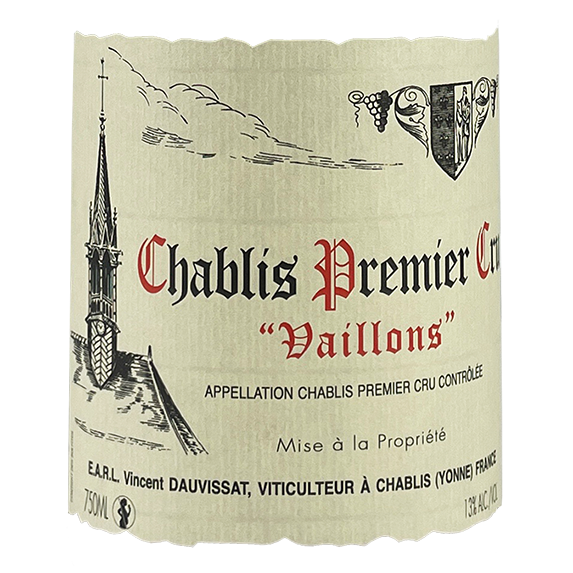
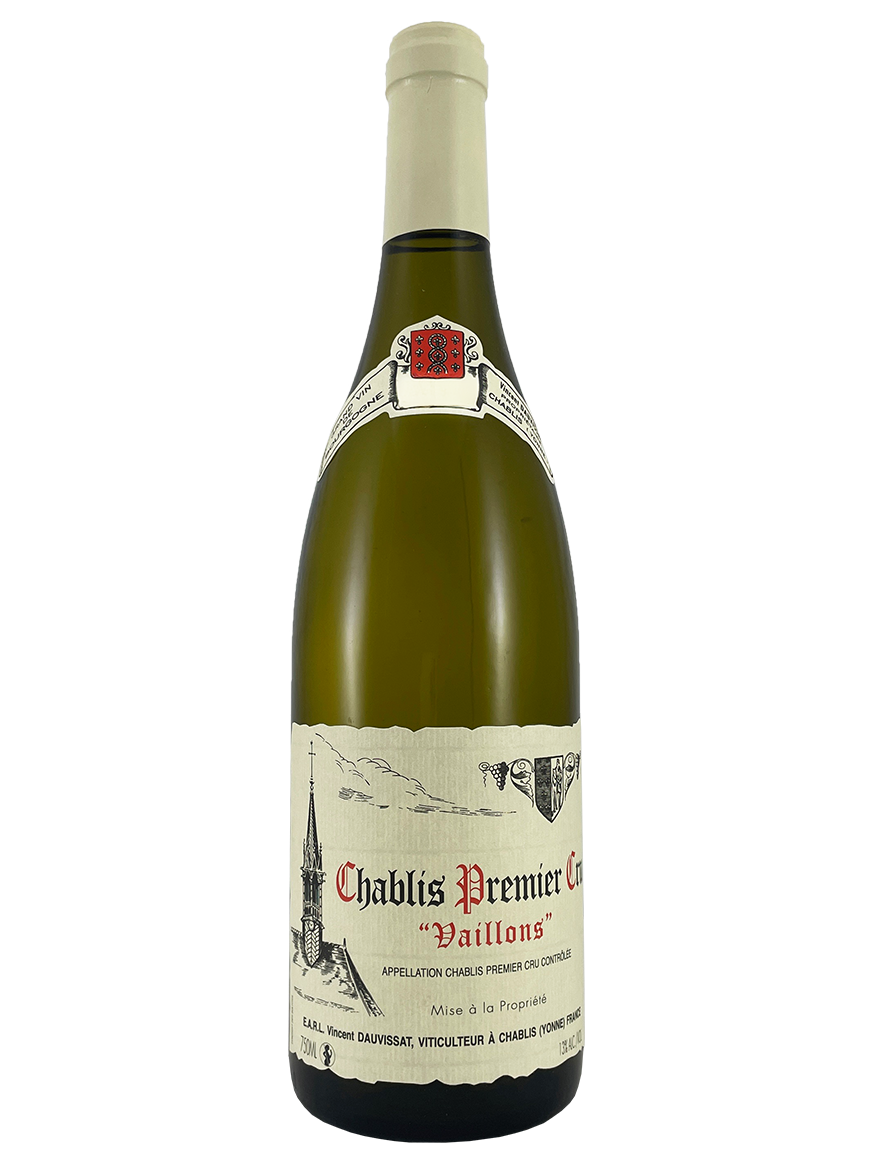
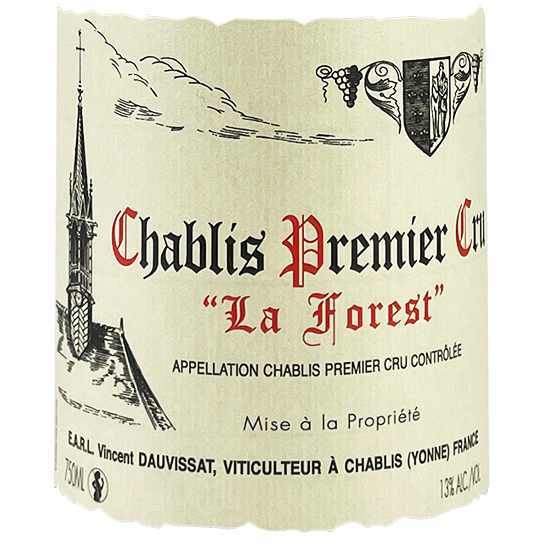
Today the domaine encompasses approximately 12 hectares of vines, including parcels in the Grand Crus Les Clos and Les Preuses, alongside renowned Premier Cru vineyards including La Forest, Séchet, Vaillons and Montmains, as well as Chablis and Petit Chablis.
All wines are estate-farmed and follow essentially the same rigorous vinification philosophy, including those released under the Dauvissat-Camus label, which the domaine considers equivalent to wines bottled under Vincent Dauvissat's primary label.
Production of Les Clos is extremely limited, and bottles are tightly allocated around the world. Its combination of scarcity, provenance, extraordinary terroir, and remarkable longevity has established Vincent Dauvissat Les Clos Grand Cru as a benchmark not only for Chablis, but for age-worthy Chardonnay and fine white Burgundy as a whole.
The expressive nose of still mostly primary green fruit and white flowers evidences only the first hints of secondary character. Similarly, the wonderfully refined flavors flesh good power, muscle, sap, complexity, typicity, concentration and an almost palpable sense of stoniness on the attractively dry and highly persistent finale. In sum, this is a stunner of a wine that to my taste is very much still on the way up and while it certainly could be enjoyed now I would be inclined to allow it at least another 3 to 5 years of cellar time first. In a word, brilliant! Burghound 96
Choose options
More Products Like This