Notes:
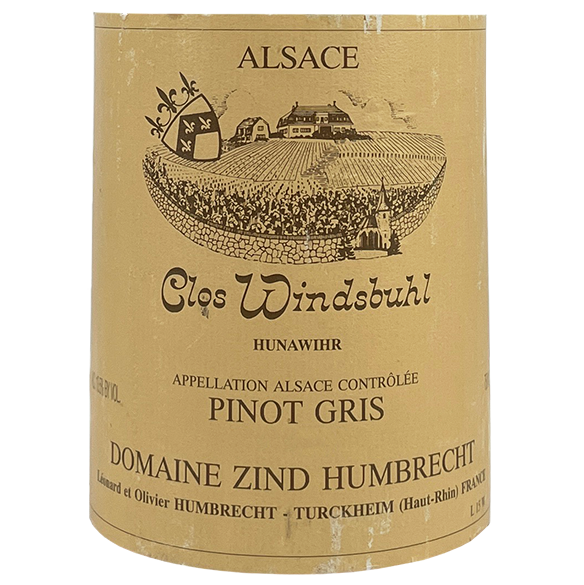
Producer: Domaine Zind-Humbrecht is one of Alsace's most respected estates, with the Humbrecht family's winemaking heritage extending back to the seventeenth century. The modern domaine was established in 1959, when the Zind and Humbrecht families combined their vineyard holdings, creating an estate with parcels across some of the region's most distinctive terroirs. Under Léonard Humbrecht and subsequently Olivier Humbrecht MW, the domaine became internationally recognized for its meticulous vineyard management, low yields, and commitment to expressing individual vineyard character. Olivier Humbrecht, the first French Master of Wine, has been particularly influential in developing the estate's biodynamic viticulture and natural approach to winemaking. The domaine's range includes celebrated Grand Cru wines as well as individual vineyard bottlings such as Clos Windsbuhl, a historic site known for producing wines with concentration, pronounced acidity, and considerable aging potential. The 1998 Pinot Gris Clos Windsbuhl represents a particularly rich expression of the vineyard, combining substantial residual sweetness with the mineral structure and freshness associated with its limestone soils.
Vineyard: Clos Windsbuhl is a historic enclosed vineyard overlooking Hunawihr, near Riquewihr in Alsace's Haut-Rhin department. The site occupies an elevated hillside with a southerly exposure, where the relatively cool, late-ripening climate allows grapes to develop considerable aromatic complexity while preserving acidity. Its soils are dominated by Muschelkalk limestone, a geological formation that contributes to the vineyard's mineral character and distinctive structure. Clos Windsbuhl is generally harvested later than many of the domaine's vineyards around Turckheim, allowing Pinot Gris to achieve high levels of ripeness over an extended growing season. In 1998, the fruit reached 118° Oechsle, with relatively little influence from botrytis. The resulting wine retained unusually strong acidity for its level of ripeness, an important characteristic that distinguishes Clos Windsbuhl from warmer Alsatian sites. Vineyard yields were approximately 36 hectoliters per hectare, producing concentrated fruit with both aromatic intensity and the freshness necessary to balance a richly textured wine.
Winemaking: The 1998 Pinot Gris Clos Windsbuhl underwent natural fermentation, developing a substantial palate while retaining considerable residual sugar. The finished wine reached 12.8% alcohol with 71 grams per liter of residual sugar, creating a distinctly sweet expression of Pinot Gris, approaching the richness associated with Vendanges Tardives wines, although it was not bottled under that designation. Olivier Humbrecht's original vintage notes compare the 1998 to the 1996 from the same vineyard, emphasizing its fine texture, pronounced acidity, mineral character, and aromatic complexity. The relatively limited presence of botrytis and the vineyard's naturally high acidity give the wine a different structural profile from many late-harvest Alsatian wines. The combination of sweetness and acidity provides balance and considerable aging potential, while the limestone terroir contributes a firm mineral backbone beneath the wine's richness. The wine was bottled in March 2000, following an extended period of fermentation and maturation.
Technical Details: 1998 vintage; 100% Pinot Gris; 12.8% ABV; 71 g/L residual sugar; 118° Oechsle must weight at harvest; 36 hl/ha vineyard yield; bottled March 2000; sweet white wine, with residual sugar approaching Vendanges Tardives levels. The domaine's original recommended drinking window was 2004–2015, although well-preserved bottles may continue to develop beyond that period.
Food Pairing: Foie gras terrine, duck liver mousse, roast duck with apricot glaze, pork tenderloin with caramelized apples, chicken tagine with dried fruit, blue cheese, aged Munster, and pear or quince tart are particularly suitable pairings for this richly textured Pinot Gris. The wine's 71 g/L residual sugar, concentrated fruit, and pronounced acidity allow it to complement dishes combining richness, sweetness, and savory complexity. Its mineral structure provides balance alongside foie gras and rich pâtés, while the fruit-driven sweetness pairs naturally with roasted poultry and preparations featuring apricots, pears, or caramelized fruit. For cheese, consider Roquefort or aged Munster, where the wine's sweetness contrasts with the salt and pungency of the cheese. It can also accompany fruit-based desserts that are not excessively sweet, particularly baked pears or quince tart. Its combination of richness and acidity makes it equally appealing as a contemplative wine served on its own.
Choose options
More Products Like This