Notes:
Producer: Champagne Ruppert-Leroy is one of the leading biodynamic estates in the Côte des Bar, located in the village of Essoyes in the Aube, the southernmost sector of Champagne. The domaine was established by Bénédicte Ruppert and Emmanuel (Manu) Leroy, who farm approximately four hectares originally planted by Bénédicte's father during the early 1980s. Organic farming began in 2010, followed by biodynamic certification in 2014. Beyond the vineyards, the estate operates as a fully integrated biodynamic farm, raising livestock, cultivating grains and vegetables, and producing its own composts and biodynamic preparations. This closed-farm philosophy forms the foundation of every wine they produce. Fermentations rely exclusively on indigenous yeasts, no fining or filtration is employed, sulfur is omitted entirely, and dosage is never added. Rather than correcting the wines in the cellar, Ruppert-Leroy allows farming decisions and patient élevage to shape the finished Champagne. With the exception of 11, 12, 13..., every cuvée is produced from a single vineyard and a single vintage, emphasizing the individuality of each site. Their Champagnes have become reference points for naturally made, terroir-driven wines from the Côte des Bar, combining precision, texture, and remarkable mineral definition.
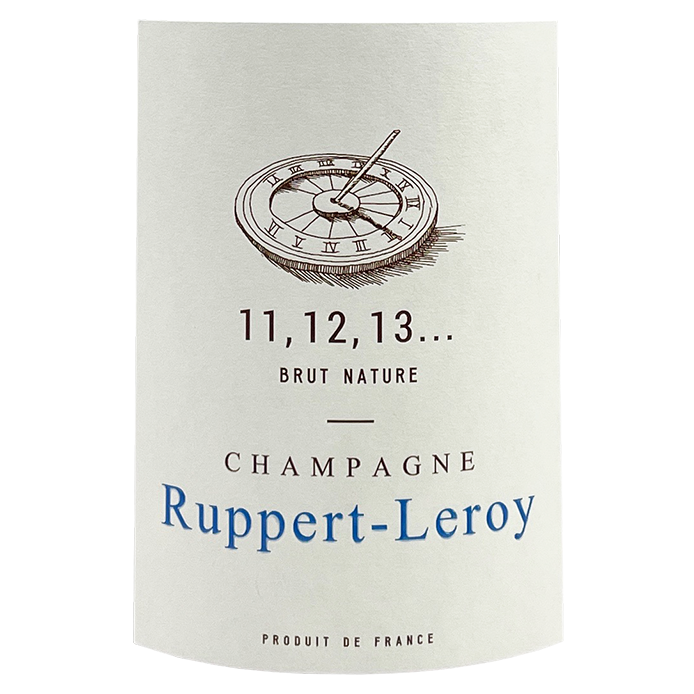
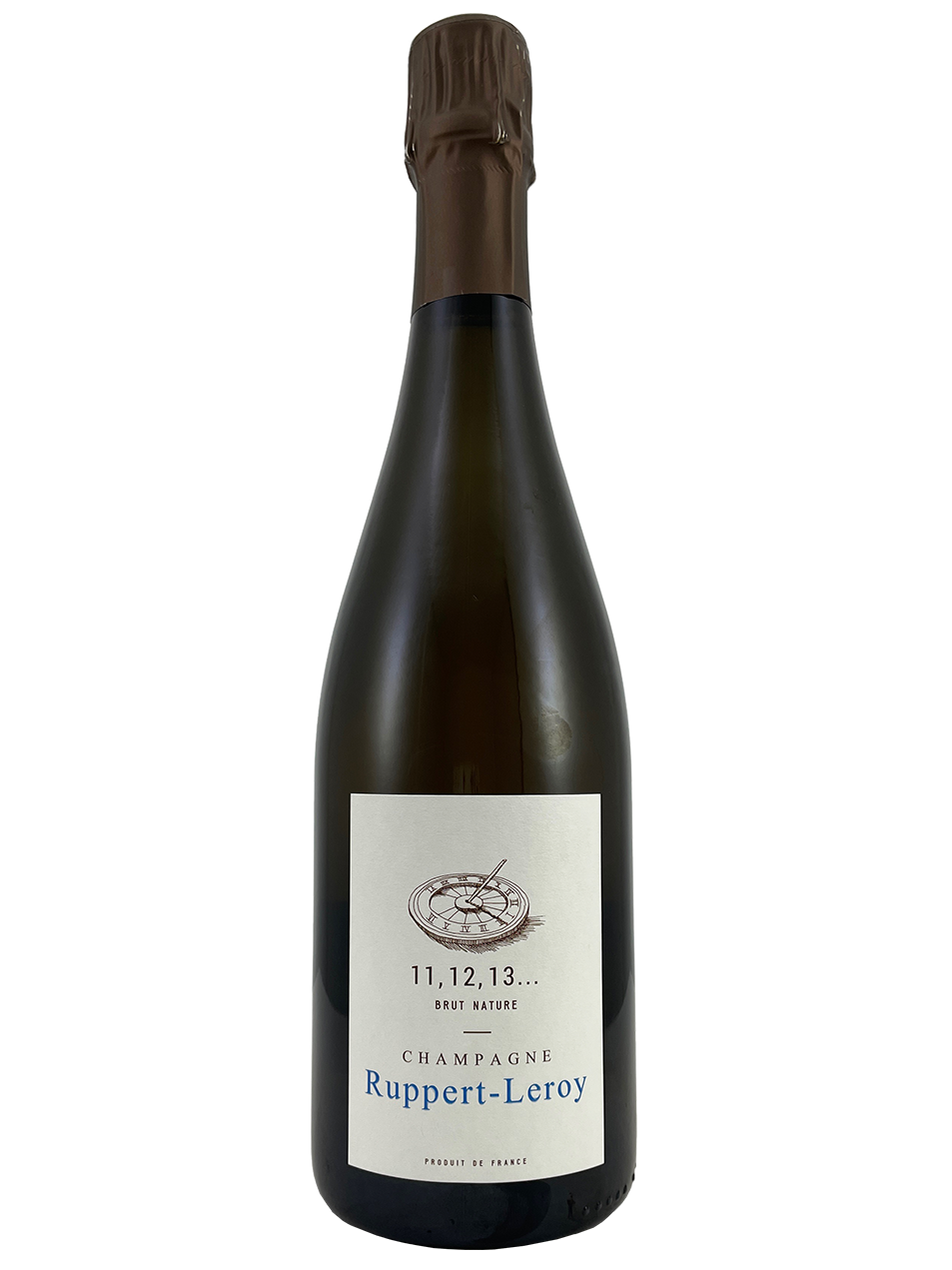
Vineyard: Unlike the domaine's single-vineyard Champagnes, 11, 12, 13... is the only multi-parcel, perpetual reserve cuvée in the portfolio. It combines fruit from Les Cognaux, Martin-Fontaine, and Fosse Grely, together with a small proportion of organically farmed grapes sourced from neighboring growers. The vineyards lie on the classic Kimmeridgian clay-limestone soils of the Côte des Bar, containing varying proportions of red clay, grey clay, and white limestone. These soils closely resemble those found farther south in Chablis and contribute both mineral tension and generous fruit ripeness. Rather than expressing a single lieu-dit, the wine serves as a portrait of the estate itself, blending every parcel into a perpetual reserve initiated with the 2011 harvest and refreshed annually. The result combines the freshness of recent vintages with the complexity accumulated through more than a decade of reserve wines.
Winemaking: Fruit is harvested entirely by hand before gentle pressing and fermentation with indigenous yeasts. Alcoholic fermentation and élevage take place for approximately nine months in a combination of 225-liter French oak barrels and 500-liter demi-muids, where the wines remain on their fine lees. Natural malolactic fermentation is allowed to proceed without intervention. Following assemblage into the perpetual reserve, the wine is bottled for secondary fermentation and aged 18 to 20 months on its lees before disgorgement. No fining, filtration, sulfur additions, or dosage are employed, preserving the wine's purity and allowing both fruit and terroir to remain fully transparent. The perpetual reserve provides additional depth and continuity while maintaining the freshness expected from a Brut Nature Champagne.
Food Pairing: Pair with oysters, scallops, grilled lobster, roasted chicken, pork loin, mushroom risotto, Comté, aged Gruyère, or roasted root vegetables. The wine's combination of vibrant acidity, chalk-driven minerality, and vinous texture also complements sushi, sashimi, smoked trout, charcuterie, and dishes featuring brown butter or toasted nuts.
Choose options