Notes:
The 2023 Riesling Niederhuser Hermannshhle Sptlese, grown on shale, has equal notions of moss and lemon. More air makes this smell simply of wet stone. The palate carries gentle sweetness but is absolutely precise and slender. Citrus frames everything with the clearest precision. Everything is serene, zesty, tender, yet so very serious. The 2023 is glorious in its lightness and disarming in its elegance. Vinous Media 97
The 2023 Niederhäuser Hermannshöhle Riesling Spätlese is deep, pure, intense and still nutty on the mineral rather than fruity nose. Dense, sweet and savory on the palate, this is a tight and concentrated yet also pretty sweet Spätlese with saline and crystalline acidity and fine grip on the finish. 8.5% stated alcohol. Screw cap. Tasted in October 2024. Wine Advocate 93+
- Producer: Weingut Dönnhoff is one of the benchmark estates of Germany’s Nahe region, with a family history of winegrowing extending back more than two centuries. Helmut Dönnhoff brought the estate to international prominence, and his son Cornelius now leads the domaine, continuing its focus on Riesling and the highly varied geology of the Nahe. The estate works a collection of exceptional sites around Oberhausen, Niederhausen, Norheim, Roxheim and Kreuznach, with Hermannshöhle occupying a particularly important place in the range. Dönnhoff produces both dry and Prädikat wines from its best vineyards, allowing the same sites to be expressed through very different levels of ripeness and sweetness. The 2023 Hermannshöhle Spätlese is a classic naturally sweet expression of Riesling, balancing significant concentration with the relatively low alcohol and acidity that define the traditional Spätlese style.
- Vineyard: Niederhäuser Hermannshöhle is one of the Nahe’s most celebrated vineyards and a VDP.Grosse Lage. The steep, predominantly south-facing hillside rises above the Nahe at Niederhausen and is distinguished by intensely mineral soils dominated by black-gray slate with volcanic components. The combination of exposure, slope and rocky soils provides an excellent environment for Riesling, while the old vines contribute naturally restricted yields. Sources for the Spätlese describe vines reaching approximately 70 years of age and yields around 40 hectoliters per hectare. The fruit is selectively harvested by hand. Hermannshöhle is particularly important to Dönnhoff because the estate uses the vineyard for several of its most ambitious Rieslings, including Grosses Gewächs, Spätlese and Auslese.
- Winemaking: The 2023 is 100% Riesling, with the fruit selected at Spätlese ripeness and harvested by hand. Fermentation and maturation take place in stainless steel, keeping the élevage neutral and placing the emphasis on the vineyard, fruit and natural acidity rather than oak. At 8.5% alcohol, the wine retains substantial natural sweetness, but the combination of acidity and Hermannshöhle’s mineral character gives the finished wine considerably more tension than its analytical sweetness might suggest. This is an important distinction with classic German Spätlese: sweetness is part of the wine’s balance rather than its only defining feature. Both Vinous and Wine Advocate specifically emphasize the precision, acidity and mineral character of the 2023, while James Suckling highlights its combination of extremely light weight and significant concentration.
- Technical Details: 100% Riesling. Niederhäuser Hermannshöhle, Nahe, Germany. VDP.Grosse Lage. Steep, south-facing vineyard with black-gray slate and volcanic components. Selective hand harvest. Fermented and matured in stainless steel. 8.5% alcohol. Spätlese; naturally sweet. The combination of low alcohol, residual sweetness and firm natural acidity gives the wine the ability to develop for decades in bottle; both Wine Advocate and Vinous give the 2023 long-term drinking windows extending well beyond 2050.
- Food Pairing: The combination of sweetness, acidity and low alcohol makes Hermannshöhle Spätlese particularly versatile with food. It is an excellent match for Thai or Vietnamese dishes with aromatic herbs and moderate chile heat, glazed pork, duck with fruit-based sauces, or richer preparations incorporating ginger and spice. It also works particularly well with mildly salty cheeses and blue cheese, where the sweetness provides contrast. For dessert, keep the pairing restrained: fruit tarts, poached pears or fresh stone fruit are better matches than very sweet desserts.
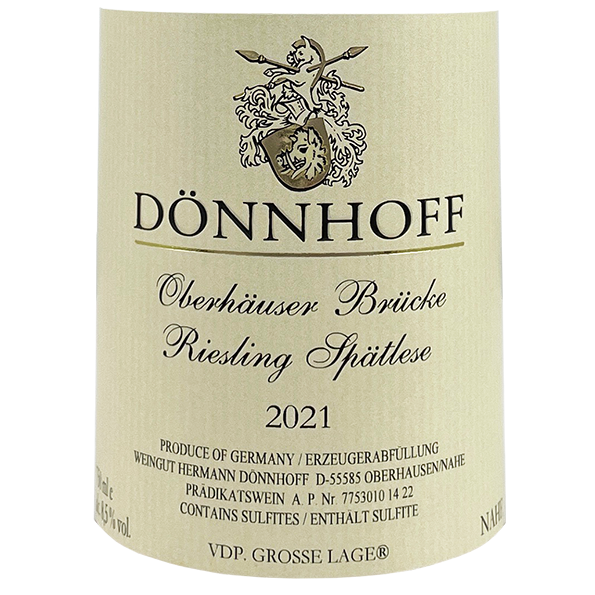
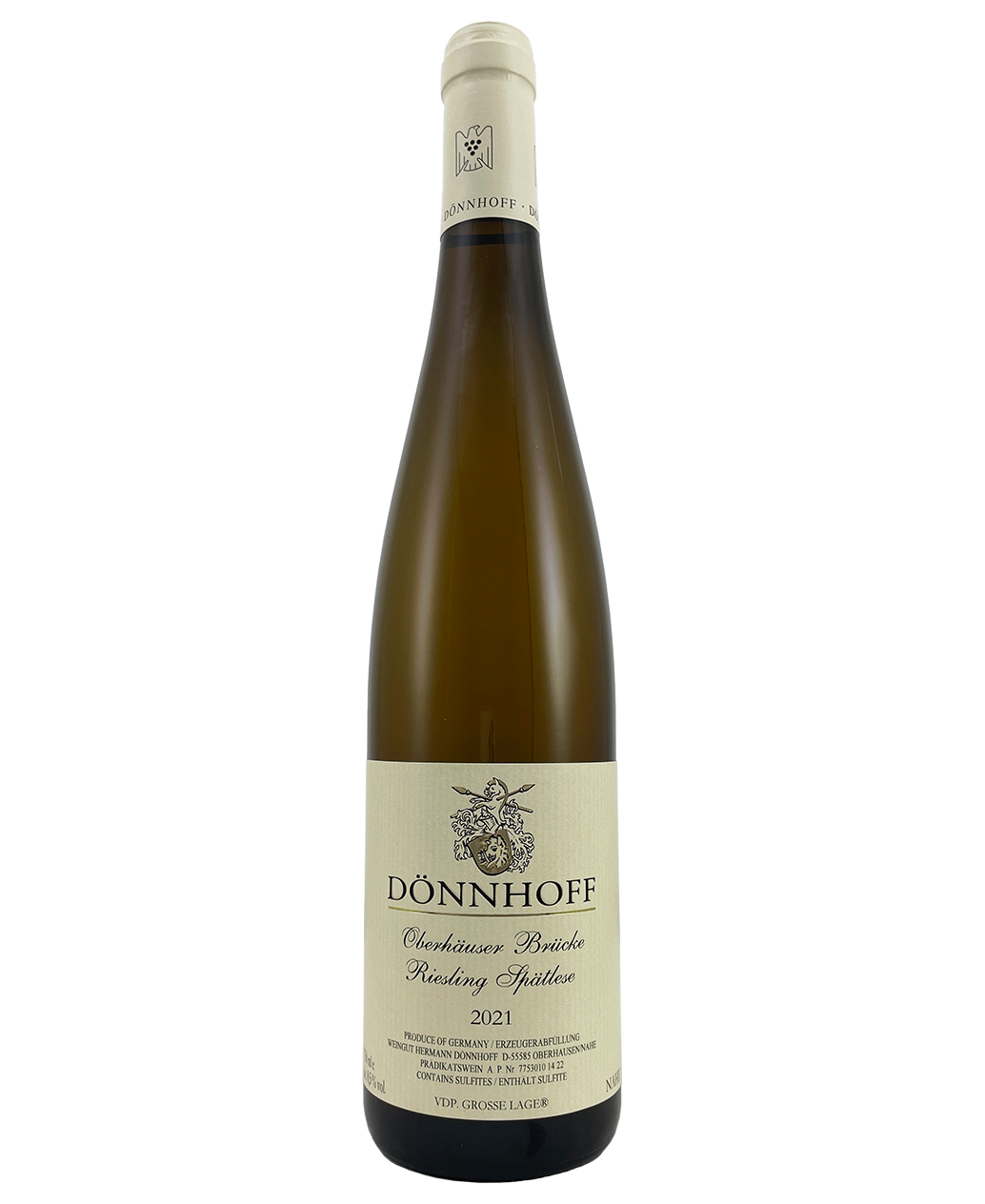
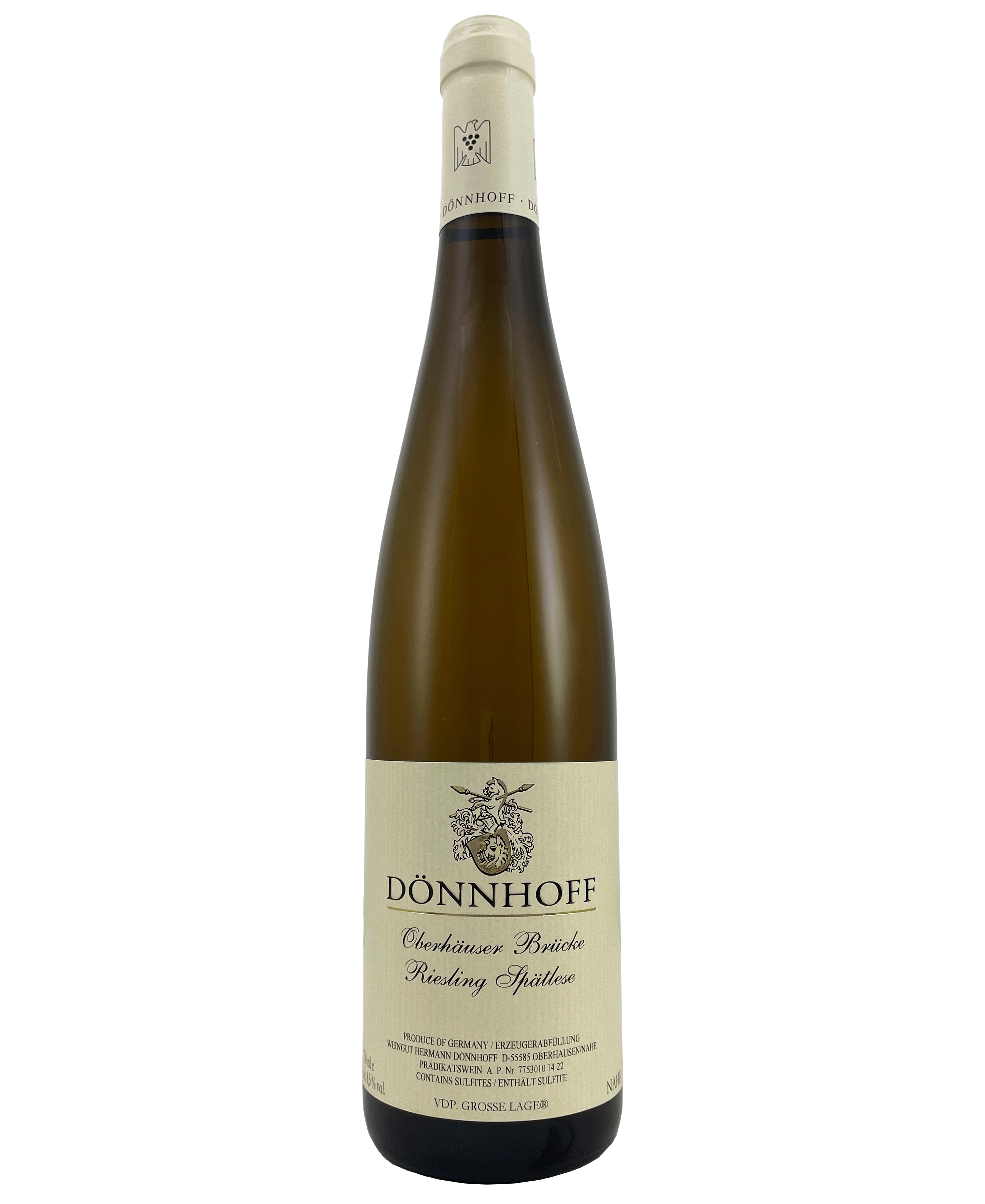
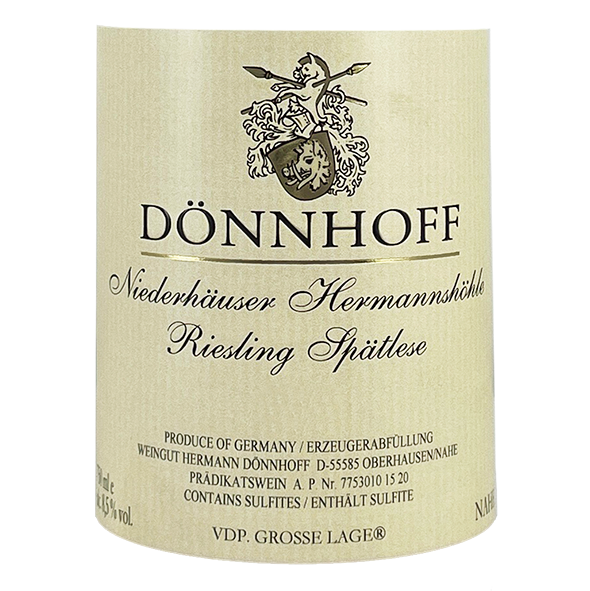
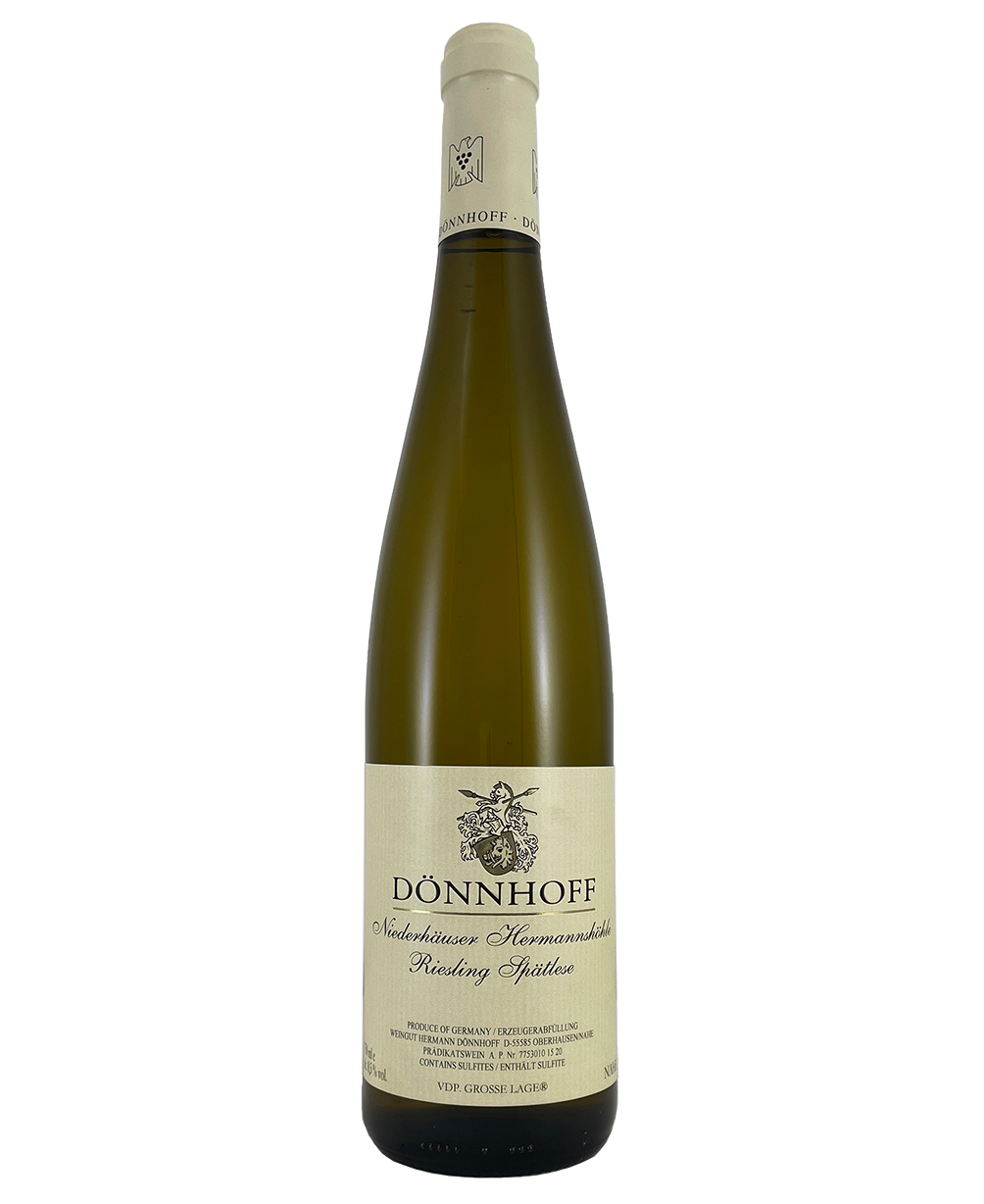
Donnhoff Niederhauser Hermannshoehle Riesling Spatlese 2023
Reviews:
Wine Advocate: 93+
Vinous Media: 97
Choose options
More Products Like This