
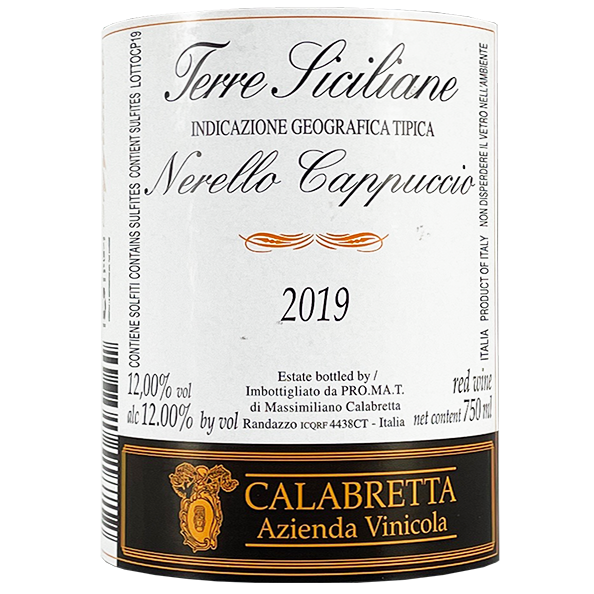
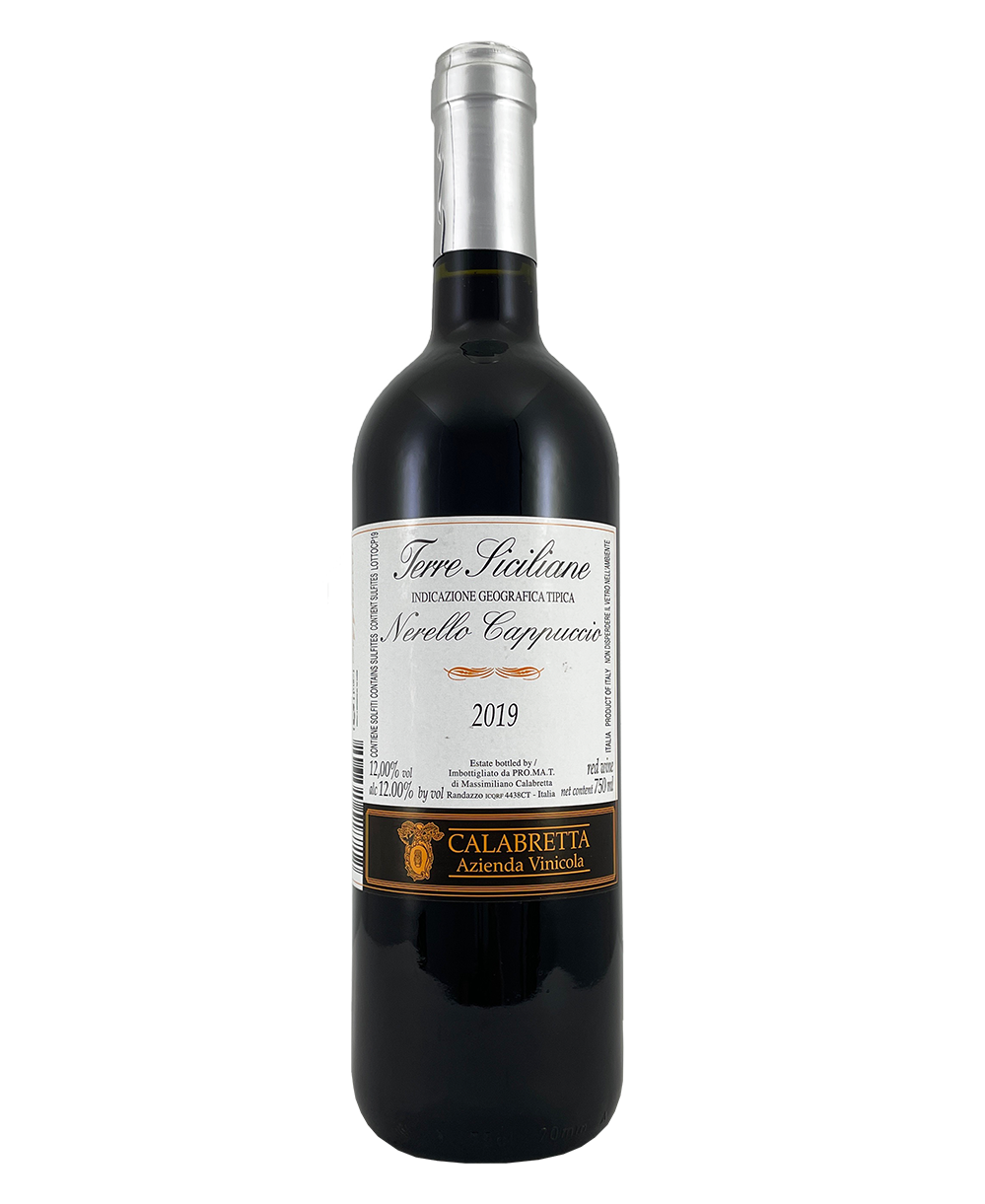
Notes:
Calabrettas vineyards are located nearly a half mile above sea level in the black volcanic soils of Etnas north slope, between Randazzo and Castiglione di Sicilia. There, Calabretta farms roughly seven hectares of mostly 70- to 80-year-old vinesmany of them ungraftedon stepped terraces supported by stone walls.
Since the winerys founding in 1900, the Calabretta family has farmed and produced wines from Etnas ancient indigenous varietiesincluding Nerello Mascalese and Nerello Cappuccioin the mountains unique noble vineyards.
Historically, the family had sold its wine in sfuso or in barrel to restaurants and to private customers, many of whom travelled long distances to pick up their wine. But in 1997, third- and fourth-generation father and son Massimo and Massimiliano Calabretta decided to bottle their best wine under their own label to ensure the winemaking traditions of their family and Etna would not be lost.
Trapped in Time
Slow Foods Slow Wine guide has described Calabrettas style as a thousand miles away from other Italian wine, but the gap might be better measured in time, since the estate seems stuck somewhere in the 19th century.
In fact, Calabrettas most distinguishing feature is its dedication to long aging, which has stayed the same throughout the familys history as winegrowers. The Etna Rosso ages much like Barolo and Brunello were aged decades ago, in massive (50- 70-hectoliter) neutral Slavonian oak botti for 6 to 7 years.
The vineyard practices sound modern but are in fact rooted in the past. They avoid using chemical pesticides or herbicides, and they harvest by hand, starting around the second week of October. Fermentations are carried out exclusively with wild yeasts.
Considering such traditional approaches, its not surprising that Calabrettas wines are so reminiscent of the compelling Brunellos from Montalcinos Soldera, Cerbaiona and Livio Sassetti, or the many great traditional Barolos of the 60s and 70s.
Choose options