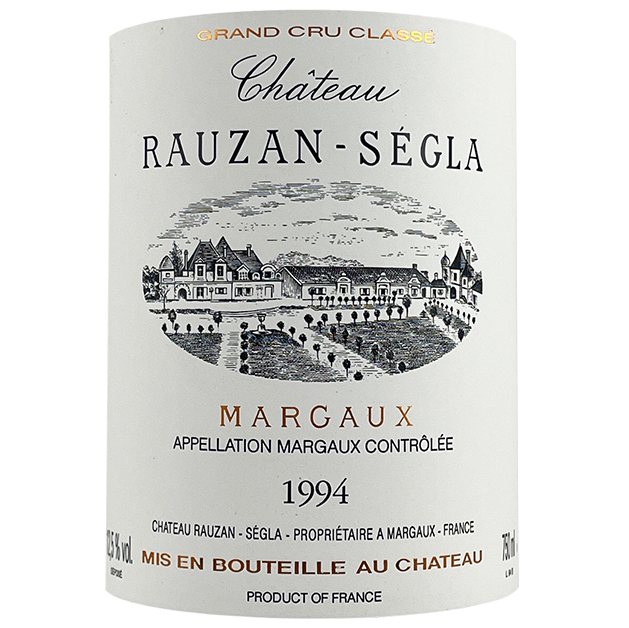
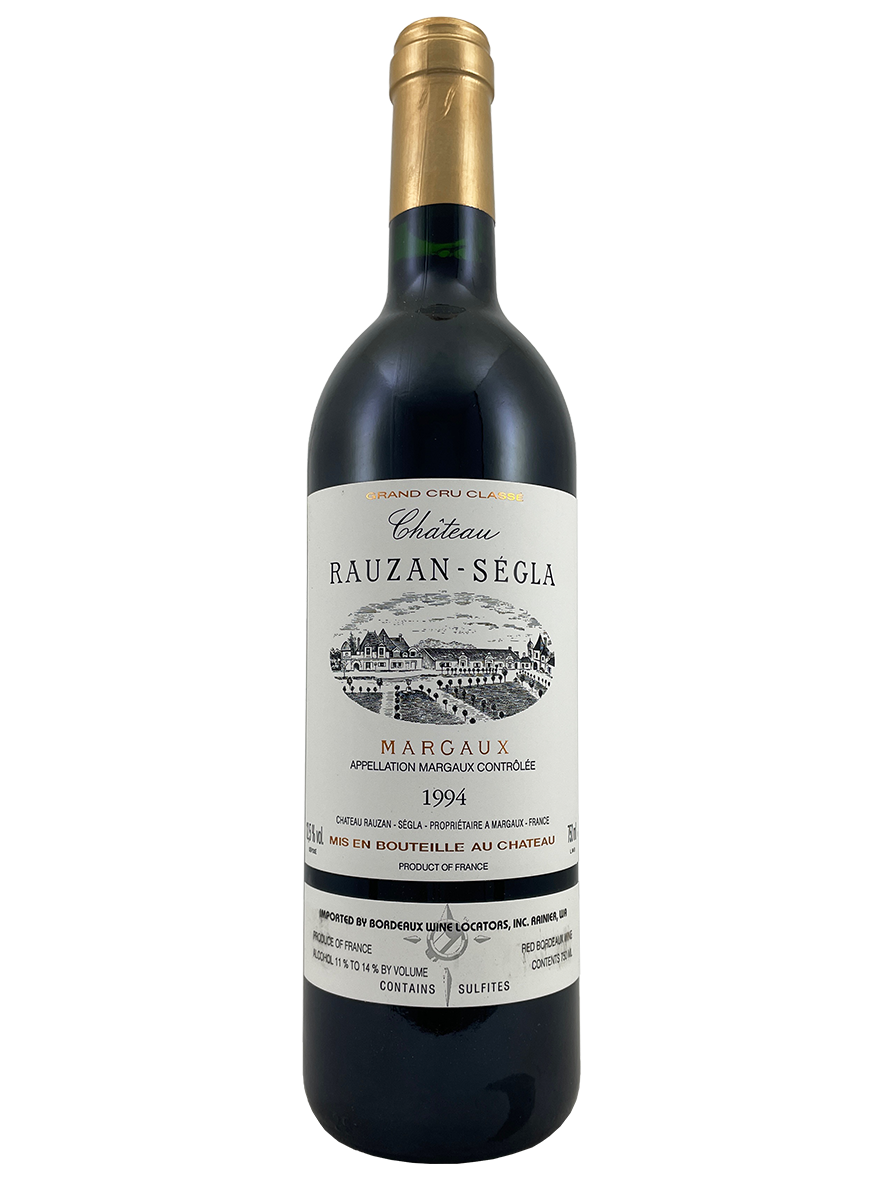
Notes:
In 1994 a brutal selection process resulted in only 45% of the production going into the first wine, which is a blend of 80% Cabernet Sauvignon and 20% Merlot. The high percentage of Cabernet Sauvignon is due to the fact that most of Rausan-Segla's Merlot vineyards are young and not well drained - a deadly combination in such a wet year as 1994. This powerful 1994 will require patience. The color is an opaque, dense, purple/black. The nose offers toasty new oak aromas (60% new oak barrels are utilized each year), along with those of subtle, ripe cassis fruit. Full-bodied, with a 1986-ish feel, high tannin, considerable power and thickness, and potentially higher ripeness and intensity than the 1986 possessed, the 1994 will require 10 years of cellaring; it should last for 25 or more years. It is unquestionably the most powerful and concentrated 1994 of the Margaux appellation. Most Bordeaux enthusiasts recognize that Rausan-Segla's return to fine wine production began with a stunning 1983. With the acquisition of this estate by Chanel, it is poised to become the second finest wine of the appellation (following only Margaux). - Robert Parker 90-92
- Producer: Château Rauzan-Ségla is one of the historic estates of Margaux and was ranked Deuxième Grand Cru Classé (Second Growth) in the 1855 Classification. The property traces its origins to 1661, when Pierre des Mesures de Rauzan began assembling the vineyard that would eventually be divided into Rauzan-Ségla and Rauzan-Gassies. The 1994 vintage occupies a particularly interesting place in the château’s history because it was the year the Wertheimer family, owners of Chanel, acquired the estate. John Kolasa, formerly of Château Latour, was subsequently brought in to lead a major revival of Rauzan-Ségla. Many of the most significant changes to the cellar and vineyards came beginning with the 1995 vintage, making the 1994 something of a bridge between two eras: the final expression of the property before the extensive modernization that followed, but also the first vintage under the ownership that would ultimately restore Rauzan-Ségla to the upper ranks of Margaux.
- Vineyard: Rauzan-Ségla occupies classic Margaux gravel terroir, with deep gravel and clay-gravel soils that provide excellent drainage and are particularly well suited to Cabernet Sauvignon. The vineyard sits on well-drained rises near the Gironde estuary, whose moderating influence helps Cabernet achieve full maturity while preserving freshness. The 1994 growing season presented a distinct challenge. Spring and much of summer provided favorable conditions, including warm, sunny weather, before substantial rainfall arrived in September. The cooler temperatures accompanying that rain helped limit rot, but careful selection at harvest became particularly important. Cabernet Sauvignon forms the backbone of the 1994, and its high proportion gave the finished wine the structure and firmness needed for extended bottle development.
- Winemaking: The 1994 blend is 69% Cabernet Sauvignon, 28% Merlot and 3% Cabernet Franc. This was made just before John Kolasa began the extensive changes that would reshape the estate from 1995 onward. Under his direction, the chai was expanded, smaller fermentation vats were introduced to allow more precise parcel-by-parcel vinification, vineyard drainage was improved, and portions of the vineyard were replanted or regrafted. The 1994 therefore provides an interesting look at Rauzan-Ségla immediately before that transformation. Cabernet Sauvignon is particularly prominent in the blend, giving the wine a firm structural core, while Merlot supplies additional breadth and Cabernet Franc contributes a small aromatic component. At more than 30 years from vintage, the wine has had ample time for that originally firm structure to evolve and for the secondary complexity of mature Margaux to emerge.
- Technical Details: Margaux AOC, Bordeaux, France; Deuxième Grand Cru Classé under the 1855 Classification. The blend is 69% Cabernet Sauvignon, 28% Merlot and 3% Cabernet Franc. Published bottle listings generally place the alcohol around 13%, though conflicting figures exist, so I would leave exact alcohol out unless confirmed from the bottle itself. The 1994 is particularly notable historically as the vintage marking the Wertheimer family’s acquisition of Rauzan-Ségla and the beginning of the modern chapter of the estate.
- Food Pairing: With more than three decades of bottle age, the emphasis should be on dishes that complement rather than overwhelm mature Margaux. Roast lamb, beef tenderloin, duck breast, veal or roast chicken with mushrooms are particularly good choices. Porcini and morels work naturally with the developed savory character of mature Bordeaux, while aged Comté makes a good pairing after dinner. Given the age of the 1994, stand the bottle upright beforehand and decant carefully for sediment, allowing the condition of the individual bottle to determine how much additional air it receives.
Choose options
More Products Like This