Etienne Calsac
I had the pleasure of meeting Étienne Calsac on my last trip to Champagne and immediately fell in love with what he is doing. Étienne is one of the most exciting young grower-producers in Champagne today. In 2010, at just 26 years old, he took over the small family holdings in and around Avize and created his own domaine. Prior to that, the family’s fruit was sold to the large houses, so there was no estate winery of their own.
Like many of the new generation of growers, Étienne is based in a modern warehouse facility in the industrial section of Avize. His goal from the beginning was to explore the full potential of his vineyards himself and translate their character as clearly as possible into the wines. From the outset, he placed a strong emphasis on organic viticulture, using grass cover crops, careful tilling, and in some parcels even horse plowing. His approach in both the vineyard and cellar is thoughtful and restrained, favoring minimal intervention and allowing the land to speak.
Today, all of Étienne’s parcels are farmed organically, with some biodynamic principles also put into practice. His meticulous attention to every step of the process reflects a deep commitment to terroir expression and craftsmanship, resulting in Champagnes that feel precise, transparent, and deeply rooted in place.
He vinifies each parcel separately, uses both stainless steel and neutral oak depending on the cuvée, and frequently draws on reserve wines to build complexity in his blends. Spontaneous fermentations and aging under cork in some bottlings give his Champagnes a texture that is expressive and detailed, balanced by bright acidity and mineral tension. Beyond his core focus on Chardonnay, Étienne also works with rare, ancient, and almost forgotten Champagne varieties such as Petit Meslier, Arbane, and Pinot Blanc in a cuvée he calls Les Revenants.
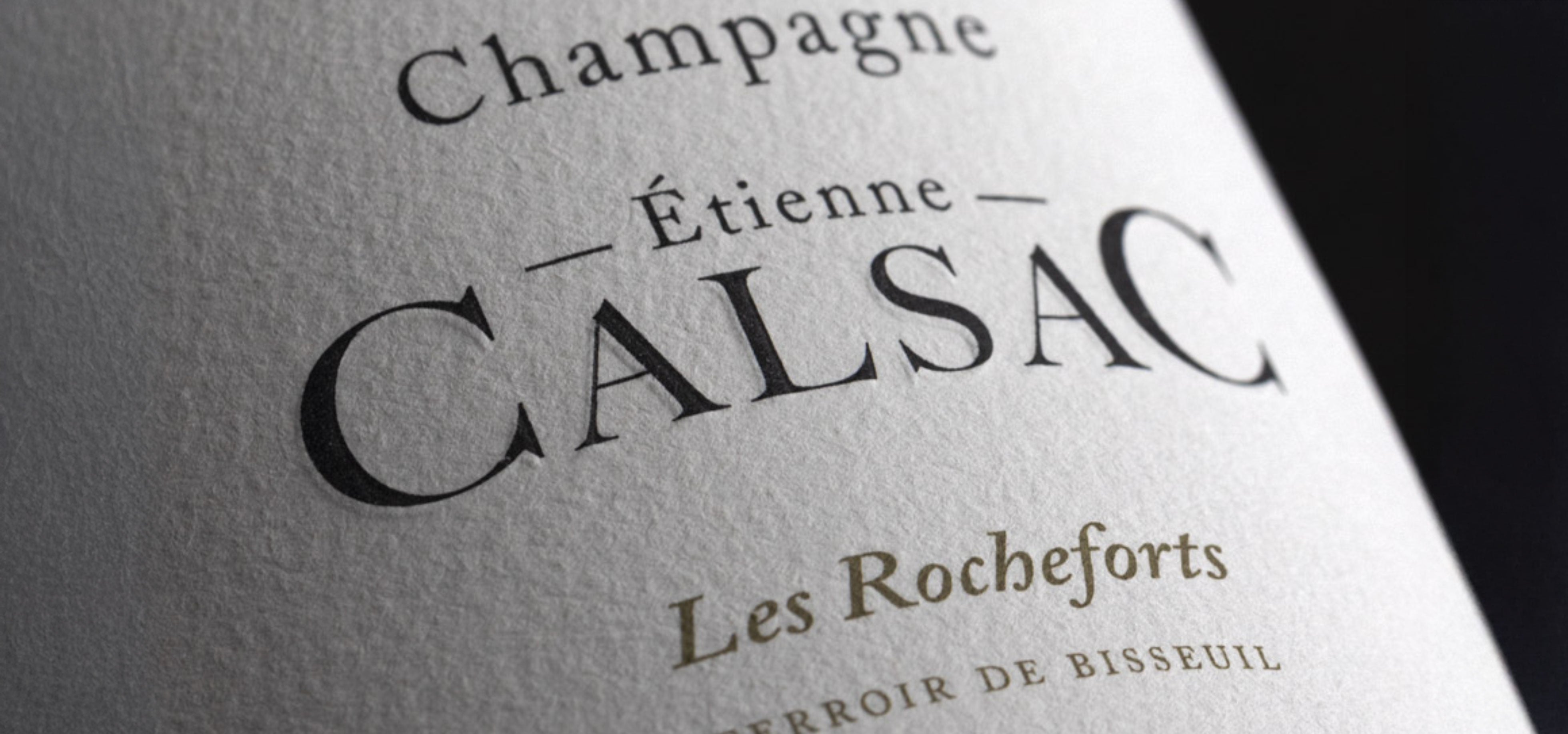
The heart of Calsac’s range includes the elegant yet incisive Blanc de Blancs L’Échappée Belle, a blend of estate Chardonnay from the Côte de Sézanne, Grauves, and Bisseuil, matured on fine lees with a portion of reserve wine to add depth. From there, the lineup expands into more singular expressions of Chardonnay, including Les Rocheforts, a Premier Cru Blanc de Blancs from a single parcel in Bisseuil.
With just under three hectares of vines, production is on the smaller side, with roughly 25,000 bottles produced annually across all cuvées. When I say there is not much of it, believe me, securing even a single case of some of these wines can be challenging. If you have not yet discovered this gem of a producer, now is your opportunity.


Style and Classification
L’Échappée Belle is an extra-brut Blanc de Blancs Champagne made entirely from 100% Chardonnay, showcasing a vibrant and mineral-driven profile with very low dosage.
Terroir and Vine Sources
The grapes come from a blend of Calsac’s estate vineyards across the Côte des Blancs, Côte de Sézanne, and Vallée de la Marne (notably Grauves, Avize, and Bisseuil), giving the wine breadth and precision from these chalky clay-limestone soils.
Texture and Aromatics
On the nose and palate, L’Échappée Belle shows bright citrus, green apple, white flowers, and saline, chalky mineral notes, with fine bubbles and a clean, focused finish typical of quality Côte des Blancs Chardonnay.
Style and Classification
Les Rocheforts is a Premier Cru Blanc de Blancs Champagne made from 100% Chardonnay.
Terroir and Vineyard
Sourced from a single vineyard parcel called Les Rocheforts in the Premier Cru village of Bisseuil (Vallée de la Marne), the vines, many planted in the 1980s, grow on pure chalk soils with a southeast exposure, lending tension and finesse to the wine. Winemaking Approach The base wine undergoes spontaneous fermentation with indigenous yeasts and is vinified partly in neutral oak and partly in stainless steel. Approximately 25–30% reserve wine from a perpetual reserve started in 2012 is included in the blend, and the wine spends time on lees before bottling to build texture.
Flavor Profile and Aromatics
This cuvée tends to show citrus and green apple notes, along with chalky minerality, white flowers, and fine brioche on the nose and palate, driven by vibrant acidity and a long, saline finish
Grape Composition
This cuvée is a blend of Pinot Blanc (about 50%), Petit Meslier (about 43%), and a small amount of Arbane (about 7%). These varieties were historically part of Champagne plantings but were largely abandoned in favor of more common grapes.
Terroir and Vineyard
The fruit comes from a single south-facing parcel in the Côte de Sézanne called Les Fours, planted by Calsac himself on sandy clay soils with chalk beneath. This exposure and soil mix help achieve full ripeness and tension in the finished wine.
Winemaking and Aging
Fermentation is spontaneous with indigenous yeasts in a 600-liter oak barrel, followed by aging on the lees for 24–30 months under cork rather than crown cap—an older Champagne tradition that adds texture and complexity. The wine is bottled with very low dosage (Extra Brut), letting the natural acidity and terroir expression dominate.
Flavor Profile and Character
Les Revenants typically delivers savory and mineral energy with citrus and floral aromatics and a creamy yet precise mouthfeel. Its mix of rare varieties brings aromatic complexity and a sense of Champagne’s historic roots.